
By Wearablewhiz / Published September 10, 2026 · Updated September 27, 2026
Apple Watch Series 12 opened for pre-order on September 9, with units in stores September 18. The story here is health sensing, not the AI extras. New heart sensors that read your body continuously instead of in snapshots, a native readiness score, and expanded vitals views are the real reasons to care about this release.
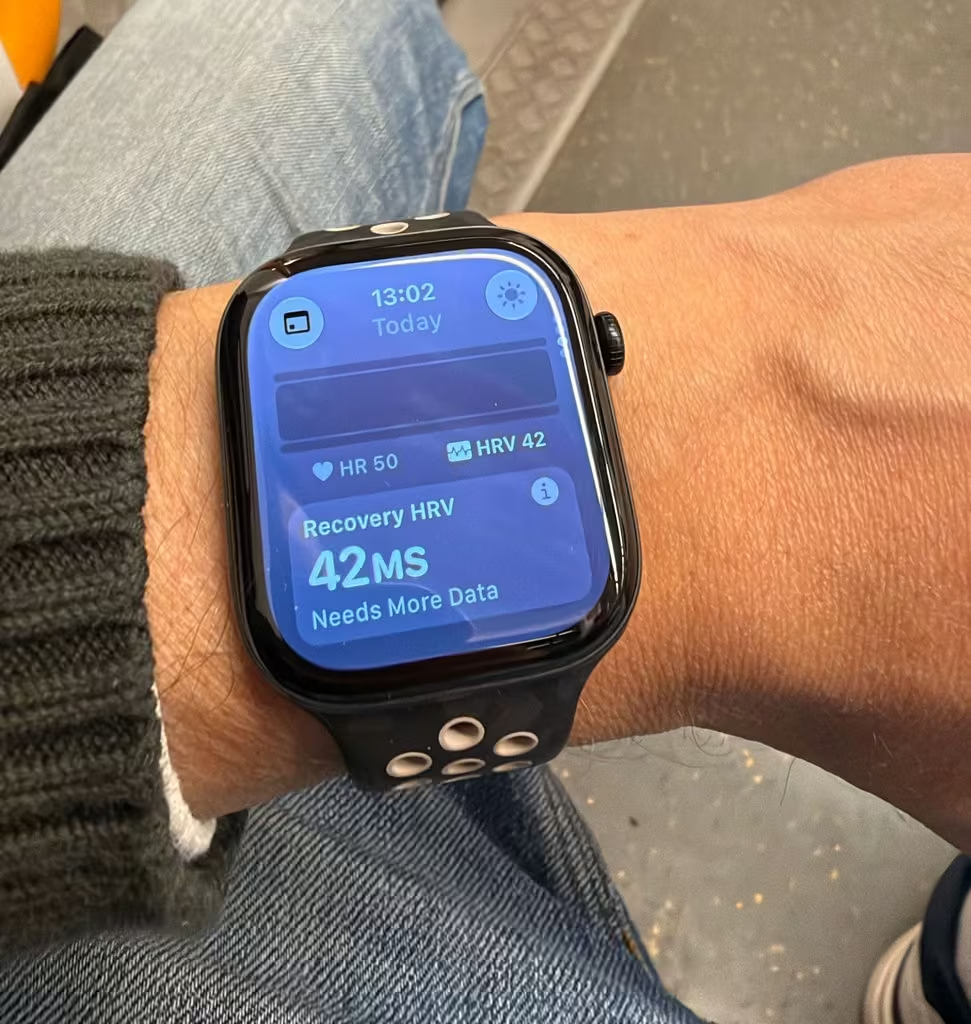
- New Health Sensing System (redesigned heart sensors + S11 chip), shared with Ultra 4
- Background heart rate now checked every 5 seconds, all day
- HRV up to 24× more often, split into separate recovery and overall numbers
- New native readiness score (0-10, recover/pace/ready/go), exclusive to Series 12 and Ultra 4 at launch
- Starts at $399, pre-orders open now, in stores September 18
Health Sensing System + S11 chip: this is the upgrade
Apple redesigned the optical and electrical heart sensors and paired them with the new S11 chip. It’s calling the combination the Health Sensing System, and it’s shared with the Ultra 4, announced the same day. This is Apple’s new baseline for heart sensing, not a one-model feature.
Background heart rate is now measured every 5 seconds, all day. That’s a real change from the periodic background checks older Apple Watches do when you’re not mid-workout.
HRV is measured far more often too. Apple says up to 24 times more than before. Outlets covering the launch calculate that as roughly every 5 minutes, up from roughly every 2 hours previously. Treat the exact interval as reported rather than a direct Apple figure.
You now get two HRV numbers instead of one: recovery HRV, for daily stress and recovery signals, and overall HRV, for longer-term cardiovascular trends.
Apple’s own spec sheet lists a third-generation electrical heart sensor as part of the system. Apple and multiple outlets covering the briefing describe a larger electrode surface area for better skin contact during ECG readings.
Apple’s claim on top of all this: the most accurate heart rate sensing in a wearable, based on a company-run study of over 1,000 participants comparing Series 12 against other bestselling wearables.
Native readiness score
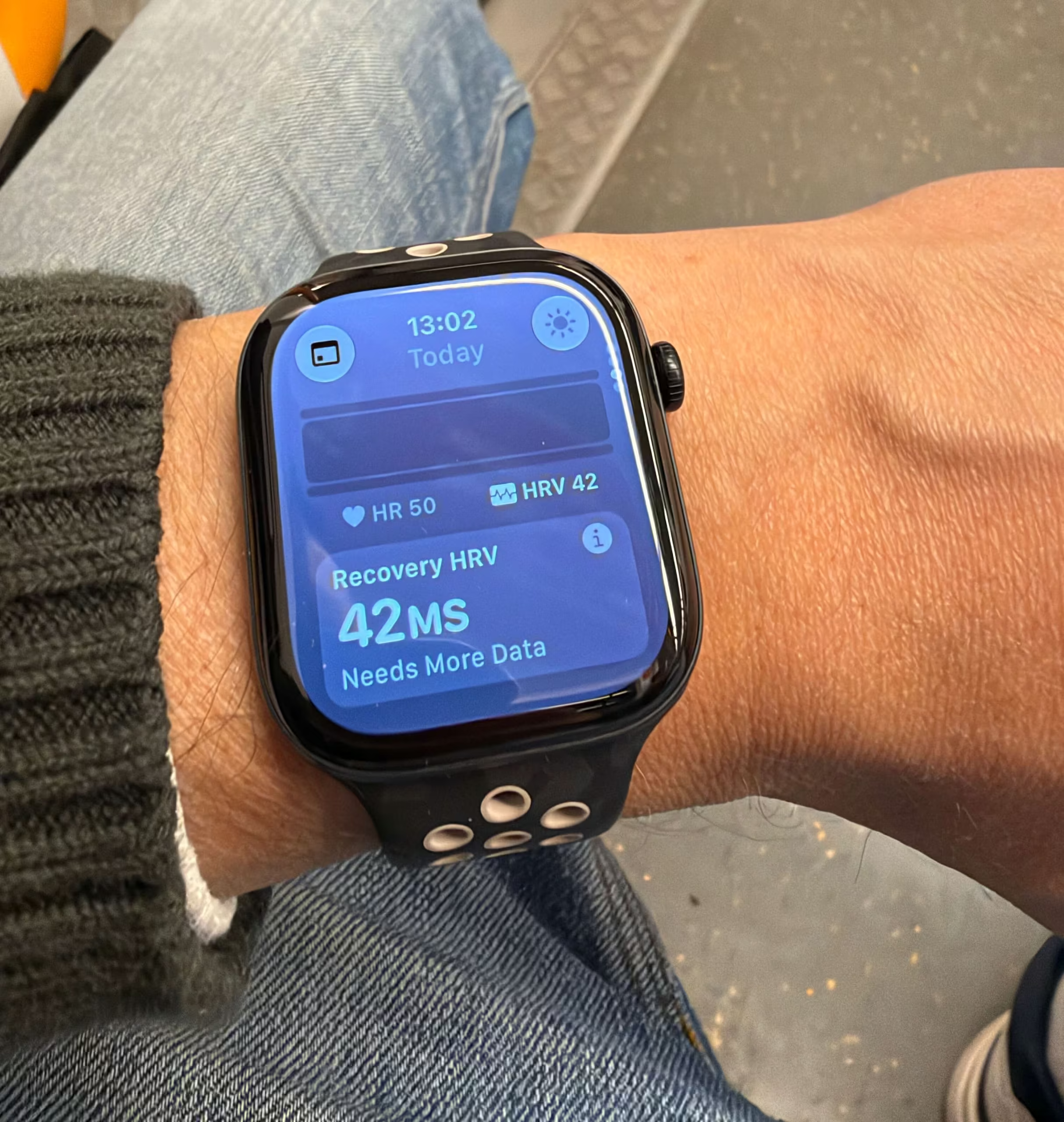
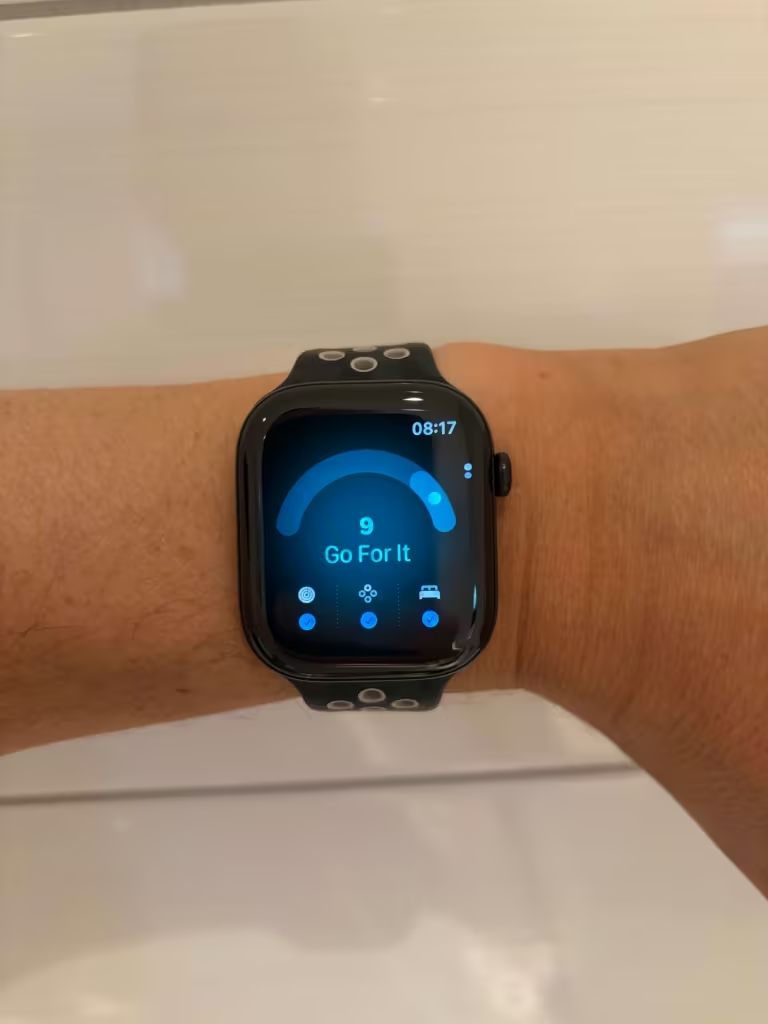
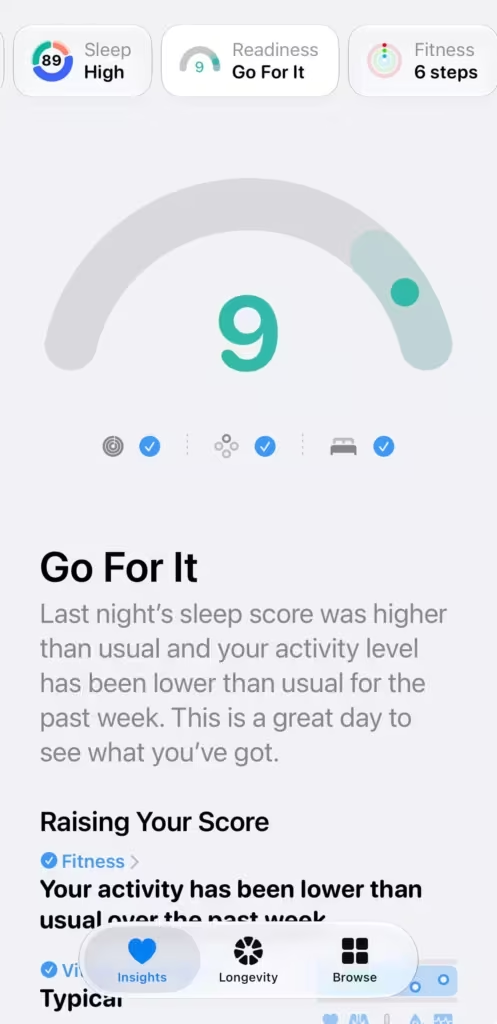
Series 12 introduces readiness: a single 0-10 score built from your recent activity, training load, vitals, and sleep score, with a plain recommendation: recover, pace yourself, ready, or go for it. It updates through the day as new data comes in.
This is the feature that actually changes your morning. Apple’s Health app has always handed you the raw ingredients: sleep score, HRV, resting heart rate, training load. What it never gave you was a verdict. That’s exactly the gap third-party apps like Training Today, or just doing the math yourself, used to fill. Readiness is Apple finally closing that gap natively.
Understand how your 28-day training load works alongside recovery metrics to avoid overtraining.
Worth knowing before you upgrade for this alone: readiness is tied to the Health Sensing System, so it’s exclusive to Series 12 and Ultra 4. It doesn’t reach older watches through the watchOS 27 update.
Expanded vitals: daytime and overnight
Overnight vitals now includes recovery HRV measured against your own personal baseline, not a generic range. A new daytime vitals view lets you toggle between overnight and daytime metrics, so you can catch a shift in your numbers before it shows up in your sleep data. The Vitals app remains a wellness tool, not a medical one.
See how heart rate, respiratory rate, wrist temperature, blood oxygen, and sleep duration combine into one baseline-compared summary each morning.
See how HRV is measured, why your number swings day to day, and what a rising or falling trend actually tells you.
Worth a brief mention
A few other changes, secondary to the sensing story above:
Outdoor workout battery life goes up to 10 hours, a 25% gain. Charging is faster too, 15 minutes gets up to 12 hours of additional use, 50% more than before. Aluminum models get Ceramic Shield 2, which Apple says is 60% tougher than the Ion-X glass on Series 11. Ceramic returns as a case material, in pearl white and night blue, alongside aluminum and titanium. The new Audio Intelligence features (Live Rewind, Siri Recap, Sound Recognition, Shazam) are also Series 12/Ultra 4 exclusives, though Live Rewind and Siri Recap ship in beta later this year, not at launch.
Who should upgrade
If you’re using a Series 9 or older, upgrading is an easy recommendation. You’re getting newer sensor hardware, much more frequent heart-rate and HRV sampling, and access to Readiness, Recovery HRV, and daytime vitals. You also gain longer battery life compared with models such as the Series 9.
For Series 10 and 11 owners, the decision is closer. The main reasons to upgrade are the new Health Sensing System, with denser heart-rate and HRV sampling, plus the features built on that data: Readiness, Recovery HRV, and daytime vitals. Everything else is comparatively incremental, and Series 11 already offers up to 24 hours of battery life.
If training load, recovery, and day-to-day readiness are the main reasons you wear an Apple Watch, Series 12 is the most relevant upgrade in years. More frequent HRV data can make those insights more useful when deciding whether to train hard, take it easier, or rest. Still, treat it as useful guidance rather than a medical or performance verdict.
If health and recovery tracking are not central to how you use your watch, there is less urgency. Most of the remaining changes are evolutionary, and the new health features are not coming to older watches through software alone.
Price, configurations, release date
Apple Watch Series 12 starts at $399 in the US. Pre-orders opened September 9 in the US and more than 50 other countries and regions, with in-store availability from September 18.
Early verdict
The sensor upgrade is the story, not the AI extras. Readiness is the first time Apple’s given you a verdict instead of raw numbers, and that alone justifies the jump if recovery and training load are why you wear the watch.
I pre-ordered mine for the sensor and readiness upgrade specifically + slightly better battery. It ships September 18.
Sources:
- Introducing Apple Watch Series 12, with the all-new Health Sensing System — Apple Newsroom
- Apple Watch Series 12 — Apple
- Apple Watch Series 12 Technical Specifications — Apple
- Apple unveils Apple Watch Ultra 4 — Apple Newsroom
- Apples own study: https://www.apple.com/health/pdf/Heart_Rate_Accuracy_Study_2026.pdf